Sign up now
Join now and unlock your hidden features and OEM upgrading experiences.
You must be logged in to submit the form.

Adaptive Cruise Control with Stop Go
Adaptive Cruise Control with Stop Go delivers genuine OEM radar‑camera‑based adaptive speed regulation for DOIP‑based JLR Defender L663 vehicles. However, many entry‑ and mid‑spec Defender units roll off the production line with basic static cruise control and lack the full Stop‑Go ADAS capability. As a result, drivers must continuously manage acceleration and braking during congested motorway commutes. If you are assembling a complete driver‑assist suite, pair this retrofit with our Blind Spot System. It combines adaptive cruise traffic‑following with lane‑change monitoring for enhanced highway safety. This kit supplies genuine OEM 77GHz front radar sensor, FCAM forward camera unit and ACC‑enabled steering‑wheel switchpack. In turn, it unlocks adjustable gap‑distance settings, traffic‑jam full‑stop behaviour and resume‑from‑standstill displayed within the instrument‑cluster graphics.
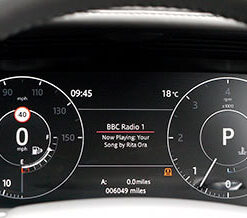
First of all, full Adaptive Cruise Control with Stop‑Go functions cannot activate by fitting physical radar‑camera hardware only. Next, technicians perform partial front‑bumper disassembly to mount the 77GHz radar unit and install the ACC steering‑wheel switch assembly. They also inspect and secure all ADAS‑grade wiring connectors. After that, our jlrcoding team executes a comprehensive DOIP diagnostic scan. We enable adaptive‑cruise‑control‑with‑stop‑go feature flags within the vehicle CCF configuration file. Furthermore, we complete multi‑parameter adaptation across DADC, FCAM, IPC, BCM and ECM control modules. Once coding completes, the system maintains user‑defined following gaps to preceding vehicles. Meanwhile, it automatically brings the Defender to a complete halt in heavy traffic conditions. For this reason, check our Interactive Driver Display (TFT cluster) to view rich ACC status and target‑vehicle graphics on your digital instrument panel.
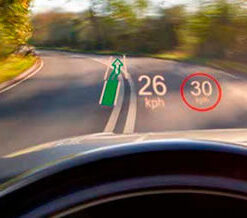
This retrofit provides OEM 77GHz front radar sensor, FCAM forward‑camera module, ACC steering‑wheel switchpack, vehicle‑specific wiring pigtails and all required mounting fasteners. The DADC driver‑assist‑domain‑controller fuses object data from radar and FCAM vision inputs. Subsequently, target‑tracking and ADAS status messages transmit over CAN‑FD bus toward IPC, BCM and ECM modules. Once the driver sets a target cruising speed, the system modulates throttle and brake output to match the velocity of traffic ahead. In traffic‑jam scenarios, Stop‑Go logic manages full vehicle stand‑still; drivers resume movement by tapping the accelerator or pressing the RES steering‑wheel button. Notably, the driver retains full overriding authority over braking and steering inputs at all times. All ACC operational sequences strictly follow original JLR factory ADAS specifications. Even so, traffic‑jam stop‑and‑resume routines remain inactive after purely mechanical hardware installation. Rather, authorised DOIP multi‑module programming plus radar‑camera static‑alignment calibration are mandatory for correct operation. Finally, you can combine this highway‑safety upgrade with Head‑Up Display to project ACC set‑speed and gap‑settings directly onto the windscreen.
This Adaptive Cruise Control with Stop Go retrofit fits 2020+ Defender L663 90, 110 and 130 models. The vehicle must feature DADC domain‑controller architecture and physical mounting provisions for the front 77‑GHz radar sensor. Therefore, please submit your VIN first. We validate existing firmware revisions for DADC, FCAM, IPC, BCM and ECM prior to front‑bumper disassembly work.
Local workshop tasks include partial front‑bumper removal, radar‑sensor mounting, steering‑wheel switch replacement and ADAS wiring routing. In some cases, base‑trim vehicles require supplementary wiring upgrades to satisfy JLR high‑speed ADAS signal requirements. After hardware fit‑out finishes, we create a secure backup of your original CCF file. We activate the adaptive‑cruise‑control‑with‑stop‑go feature flags. Then, we run radar‑camera static‑alignment and multi‑module ADAS parameter calibration. Last of all, we clear all ADAS‑related DTC fault codes from vehicle memory.
You can combine local hardware fitting with our worldwide remote coding service. Remote sessions require a DOIP‑VCI or Enet Type‑C cable. In short, follow our standard jlrcoding remote‑service workflow.
Every retrofit begins with pre‑install diagnostic health‑check and secure CCF backup. After coding completes, we validate set‑speed adjustment, gap‑change response, full‑stop braking and resume‑behaviour performance. Importantly, hardware‑only radar‑camera and switch‑pack installation cannot achieve fully‑compliant factory Adaptive Cruise Control with Stop‑Go operation.
Otherwise, incomplete module adaptation or misaligned radar‑camera hardware will produce unstable target tracking, intermittent ACC drop‑outs or persistent ADAS DTC fault codes. Ultimately, once fully calibrated, this OEM‑spec ADAS retrofit reduces driver fatigue on long motorway and commuter journeys. It suits highway commuters, long‑distance travellers and Defender overland‑focused owners.
XF 2021+
XF 2021+
XF 2021+
XF 2021+

XF 2021+
XF 2021+