Sign up now
Join now and unlock your hidden features and OEM upgrading experiences.
You must be logged in to submit the form.

Keyless entry
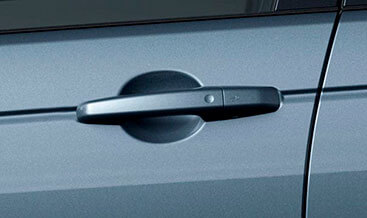
Keyless entry (Passive Entry PEPS) delivers genuine OEM hands‑free proximity‑based vehicle access for DOIP‑based JLR Defender L663 vehicles. However, many base‑trim Defender variants are supplied with standard mechanical door handles, lacking capacitive touch sensors and low‑frequency LF antenna hardware. Even on vehicles with partial PEPS hardware, factory CCF trim‑level flags keep passive‑entry features disabled. As a result, drivers must continuously press buttons on the smart‑fob to lock and unlock the vehicle. If you aim to complete your cabin convenience upgrade package, pair this retrofit with our Garage Door Opener (HomeLink). It combines hands‑free vehicle access with integrated home‑garage remote‑control functionality. This kit supplies genuine OEM capacitive door‑handle assemblies, LF proximity antenna units and dedicated wiring pigtails. In turn, it unlocks smart‑key proximity detection, touch‑to‑lock / touch‑to‑unlock behaviour and full PEPS anti‑theft system integration.
First of all, full passive keyless‑entry functionality will never activate purely by fitting capacitive‑handle and LF‑antenna hardware alone. Next, technicians remove exterior door handles, install OEM capacitive touch‑sensor handles and mount LF proximity antennas around the vehicle perimeter. They inspect and route PEPS‑specific wiring harness and verify every connector locking position. After that, our jlrcoding team completes a comprehensive DOIP diagnostic scan. We enable keyless‑entry PEPS feature flags inside the vehicle CCF configuration file. Furthermore, we perform multi‑parameter adaptation for KVM keyless‑vehicle‑module, BCM body‑control‑module and GWM gateway‑module. Once coding finishes, the KVM manages LF‑antenna polling and smart‑key authentication. Meanwhile, touch‑sensor handle inputs trigger lock‑unlock sequences compliant with JLR anti‑theft security logic. For this reason, check our Add additional key fob if you require extra authenticated smart‑fobs for multiple vehicle users.
This retrofit includes OEM capacitive touch‑sensor door‑handle assemblies, LF proximity antenna set, PEPS wiring looms, vehicle‑specific pigtails and all required mounting fasteners. The KVM keyless‑vehicle‑module transmits low‑frequency polling signals via perimeter LF antennas to detect valid smart‑key fobs within close proximity of the vehicle. Subsequently, key‑authentication status, handle‑sensor inputs and anti‑theft‑system messages travel over CAN‑FD bus toward BCM and GWM gateway modules. Once a validated smart‑key is detected nearby, touching the capacitive handle surface triggers unlock; a short touch on the handle sensor initiates central‑locking. All PEPS authentication, polling timing and anti‑theft‑lockout behaviour strictly complies with original JLR factory L663 specifications. Notably, the system retains full factory immobiliser protection against unauthorised key spoofing. Even so, proximity detection and touch‑handle functions stay dormant after purely mechanical hardware fitment. Rather, they require authorised DOIP multi‑module programming plus PEPS key‑system relearn calibration to operate correctly. Finally, you can combine this access‑convenience upgrade with Seats memory to link driver‑memory seat profiles to individual authenticated smart‑fobs.
This Keyless entry retrofit suits 2020+ Defender L663 90, 110 and 130 models. The vehicle must support KVM‑managed PEPS architecture and physical mounting provision for capacitive door‑handles and LF‑antenna locations. Therefore, submit your VIN number first. We inspect existing KVM, BCM and GWM firmware revisions before starting exterior‑door‑handle disassembly work.
Local workshop tasks include exterior door‑handle removal, fitment of capacitive touch‑sensor handles and LF‑antenna installation. Technicians route PEPS harness wiring and secure all electrical connectors. In some cases, base‑level vehicles require supplementary wiring upgrades to satisfy JLR PEPS low‑frequency communication requirements. When hardware installation finishes, we create a secure backup of your original CCF file. We activate the keyless‑entry PEPS feature flags. Then we execute PEPS smart‑key relearn, LF‑antenna parameter tuning and immobiliser anti‑theft‑system validation. Last of all, we clear all PEPS‑access‑related DTC fault codes.
You can pair local fitting with our worldwide remote coding service. Remote sessions require a DOIP‑VCI or Enet Type‑C cable. In short, follow the standard jlrcoding remote‑service workflow.
Every retrofit starts with pre‑install diagnostic health‑check and original CCF backup. After coding completes, we verify LF‑antenna proximity‑detection range, capacitive‑handle touch‑response, lock‑unlock sequencing and immobiliser anti‑theft status. Importantly, hardware‑only capacitive‑handle and LF‑antenna fitment cannot deliver fully‑compliant factory Keyless entry PEPS functionality.
Otherwise, incomplete adaptation or mis‑calibrated PEPS‑parameters can cause intermittent key detection, failed lock‑unlock operations or persistent PEPS‑access‑related DTC fault codes. Ultimately, once fully calibrated, this OEM‑spec convenience upgrade streamlines daily vehicle access. It works well for family‑shared vehicles, daily commuters and Defender overland‑focused owners.
Evoque 2012-15
Evoque 2012-15
Evoque 2012-15
Evoque 2012-15
Evoque 2012-15
Evoque 2012-15
Evoque 2012-15