Sign up now
Join now and unlock your hidden features and OEM upgrading experiences.
You must be logged in to submit the form.

Heated front seats
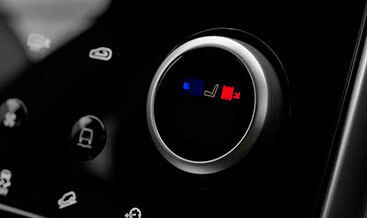
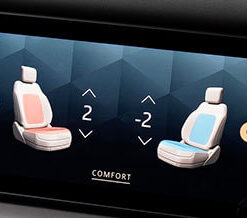
Heated front seats delivers genuine OEM multi‑level thermal comfort for driver and passenger front positions on DOIP‑based JLR Defender L663 vehicles. However, many entry‑ and mid‑trim Defender models roll off production without factory‑installed front‑seat heating‑element mats, or contain latent hardware locked out by CCF trim‑level feature flags. As a result, front occupants lack adjustable seat warmth during cold‑weather commutes and overland trips. If you aim to assemble a full cold‑weather cabin‑comfort suite, pair this retrofit with our Heated steering wheel. It unites front‑seat thermal comfort with steering‑rim heating for complete driver cold‑climate support. This kit supplies genuine OEM cushion and backrest heating‑element assemblies plus dedicated LIN‑bus wiring pigtails. In turn, it unlocks three‑level heat adjustment and dedicated front‑seat‑heating control tiles within the Pivi Pro climate menu.
First of all, multi‑level front‑seat‑heating functions will never activate by heating‑element hardware fit‑out alone. Next, technicians partially remove front‑seat upholstery and cushion assemblies to install OEM heating‑element mats beneath seat covers. They also route dedicated LIN‑bus communication wiring and verify all seat‑module connector locking. After that, our jlrcoding team completes a comprehensive DOIP diagnostic scan. We enable heated‑front‑seats feature flags within the vehicle CCF configuration file. Furthermore, we perform multi‑parameter adaptation for DSM driver‑seat‑module, PSM passenger‑seat‑module, SAM seat‑adjustment‑module, BCM body‑control‑module and IAM infotainment‑master‑module. Once coding finishes, the system manages multi‑stage power delivery to driver and passenger heating mats. Meanwhile, it also exposes front‑heat adjustment options inside the main infotainment climate‑settings interface. For this reason, check our Rear heated seats if you also wish to upgrade second‑row passenger cold‑weather comfort.
This retrofit provides OEM front‑cushion and backrest heating‑element mats, LIN‑bus wiring looms, vehicle‑specific pigtails and all required mounting fasteners. The DSM and PSM monitor built‑in thermal‑sensor readings and regulate heating‑element power output for each front seat. Subsequently, heating‑status and thermal‑protection signals travel over LIN‑bus and CAN‑FD bus toward SAM, BCM and IAM modules. Users select low, medium or high heating levels via Pivi Pro climate‑control tiles. The seat modules modulate power to maintain target seat‑surface temperatures for both driver and passenger independently. Once over‑temperature thresholds are reached, built‑in thermal‑limit protection cuts power to prevent element overheating. All front‑seat‑heating control and safety‑response logic strictly complies with original JLR factory specifications. Notably, driver and passenger heating circuits operate fully independent of one another. Even so, multi‑level front‑heating and infotainment‑menu entries remain dormant after purely mechanical hardware fitment. Rather, they require authorised DOIP multi‑module programming plus front‑seat thermal‑sensor relearn calibration to operate correctly. Finally, you can combine this cold‑climate comfort upgrade with Seats memory to store preferred heating levels alongside driver seating‑position presets.
This Heated front seats retrofit suits 2020+ Defender L663 90, 110 and 130 models. The vehicle must support DSM‑PSM‑managed front‑seat LIN‑bus architecture and physical fitment space for heating‑element mats underneath front‑seat upholstery. Therefore, submit your VIN number first. We inspect existing DSM, PSM, SAM, BCM and IAM firmware revisions before starting front‑seat‑trim disassembly work.
Local work includes partial driver‑and‑passenger‑seat cushion and backrest‑cover removal. Technicians install heating‑element mats beneath factory upholstery and secure LIN‑bus harness connections. In some cases, base‑level vehicles require supplementary wiring upgrades to satisfy JLR front‑seat‑heating electrical requirements. When hardware installation finishes, we create a secure backup of your original CCF file. We activate the heated‑front‑seats feature flags. Then we execute front‑seat thermal‑sensor relearn and heating‑output‑threshold parameter tuning. Last of all, we clear all front‑seat‑comfort‑related DTC fault codes.
You can pair local fitting with our worldwide remote coding service. Remote sessions require a DOIP‑VCI or Enet Type‑C cable. In short, follow the standard jlrcoding remote‑service workflow.
Every retrofit starts with pre‑install diagnostic health‑check and original CCF backup. After coding completes, we verify multi‑level heating‑output performance, thermal‑limit safety‑cut‑off behaviour and Pivi Pro front‑heating‑menu visibility. Importantly, hardware‑only heating‑element‑mat fitment cannot deliver fully‑compliant factory Heated front seats functionality.
Otherwise, incomplete adaptation or mis‑calibrated thermal‑sensors produce uneven front‑seat heating output or unwanted safety‑triggered power cuts. It may also store persistent front‑seat‑comfort DTC fault codes. Ultimately, once fully calibrated, this OEM‑spec upgrade greatly improves front‑occupant comfort on cold journeys. It works well for family‑shared vehicles, cold‑climate commuters and Defender overland‑focused owners.
Evoque 2012-15
Evoque 2012-15
Evoque 2012-15
Evoque 2012-15

Evoque 2012-15
Evoque 2012-15
Evoque 2012-15