Sign up now
Join now and unlock your hidden features and OEM upgrading experiences.
You must be logged in to submit the form.

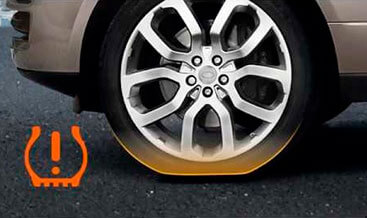
Our Tyre Pressure Monitoring System (TPMS) package delivers genuine OEM wheel‑mount RF TPMS sensor installation and activation for modern DOiP‑architecture Jaguar Land‑Rover EVA2.0 vehicles. Many DOiP chassis already include TPMM (Tyre‑Pressure‑Monitoring‑Module) hardware, CAN‑FD network routing and RF‑receiver provisions for tyre‑pressure monitoring functionality.
Many export or base‑trim variants omit the four wheel‑mount RF TPMS transmit sensors and required CCF build‑data flags, operating only on indirect wheel‑speed‑based pressure inference. Simply fitting TPMS wheel sensors alone will not unlock direct, real‑time per‑tyre pressure readouts on the instrument cluster and Pivi Pro menus.
Without validated CCF configuration and sensor‑relearn procedure, TPMM, BCM body‑controller, IPC instrument‑panel‑cluster, IMC and GWM gateway cannot synchronise tyre‑safety‑domain CAN‑FD signals. Consequently live tyre‑pressure values stay hidden, and TPMS‑related DTC fault codes may populate. Our technicians utilise official Pathfinder diagnostics to apply validated CCF edits and execute TPMS sensor relearn for complete direct TPMS operation across CAN‑FD networks.
JLR OEM Direct Tyre Pressure Monitoring System (TPMS) is a critical vehicle‑safety peripheral managed primarily by the TPMM Tyre‑Pressure‑Monitoring‑Module. Each wheel‑mount RF‑transmitting TPMS sensor measures cold‑tyre pressure and internal temperature, broadcasting encoded RF telemetry data to the on‑vehicle TPMM receiver unit.
It exchanges CAN‑FD safety‑domain status frames with BCM, IPC, IMC infotainment‑master‑controller and GWM gateway modules. TPMM validates each sensor’s unique serial identifier, filters RF‑interference artefacts, and distributes calibrated per‑wheel pressure‑and‑temperature telemetry to cluster and infotainment systems.
Next, the system generates multi‑stage visual and audible driver alerts for under‑inflation, critical low‑pressure or TPMS‑sensor communication faults. Moreover, direct TPMS provides higher‑accuracy monitoring compared to indirect ABS‑wheel‑speed‑derived pressure estimation.
After wheel‑or‑sensor replacement, a formal TPMS sensor‑relearn calibration procedure is mandatory for TPMM to recognise new sensor serial‑numbers. Even so, physical wheel‑mount TPMS‑sensor hardware alone cannot activate this complete direct‑TPMS feature‑set.
Your vehicle CCF build‑file must declare that direct TPMS wheel‑sensor hardware is physically fitted. Generic third‑party coding cannot replicate JLR factory RF‑sensor serial‑number enrolment, signal‑filtering or pressure‑threshold warning‑calibration tables.
Poor‑quality configuration triggers intermittent TPMM‑BCM DTC faults, missing live tyre‑pressure displays or incorrect low‑pressure warning thresholds. Our programming adheres strictly to official JLR TOPIx workshop technical standards.
We apply only approved CCF‑flag changes and avoid irreversible TPMM ECU‑flash‑operations. Existing ABS, indirect tyre‑pressure monitoring and Pivi‑Pro infotainment functions remain fully intact once coding completes.
Once wheel‑sensor fitment, TPMS sensor‑relearn calibration and DOIP configuration finish, Tyre Pressure Monitoring System (TPMS) runs strictly to original JLR factory‑specifications. Most importantly, real‑time direct per‑wheel tyre‑pressure and tyre‑temperature telemetry becomes fully operational.
Drivers gain native Pivi Pro vehicle‑status‑menu and instrument‑cluster access to view individual wheel pressure readings. Besides that, tiered visual‑audible low‑pressure fault warnings trigger according to JLR factory‑defined inflation‑threshold limits.
The TPMS‑system‑status and sensor‑telemetry metadata‑signals transmit correctly across the CAN‑FD safety‑bus without communication conflicts. At the same time, existing ABS‑based indirect pressure‑monitoring routines retain fallback operational compatibility.
This retrofit‑activation‑service supports DOiP EVA2.0 Jaguar Land‑Rover platforms equipped with TPMM receiver‑module hardware. Supported models include New Range Rover L460, Range Rover Sport L461, Defender L663, Velar L560 and Discovery 5 L462.
On one hand, some vehicles already have OEM wheel‑mount TPMS‑sensors physically fitted and only require pure‑software‑activation plus sensor‑relearn calibration. On the other hand, other base‑spec variants need the full TPMS retrofit‑kit including four RF wheel‑sensors and valve‑stem service‑parts. Notably, units without functional TPMM hardware or non‑compliant TPMM‑IPC firmware cannot use this upgrade.
Before technicians start physical or coding‑work, we run a full pre‑upgrade diagnostic‑scan. It validates module‑firmware‑versions, CAN‑FD safety‑bus health and TPMS‑hardware‑eligibility‑status.
To begin with, we perform a full diagnostic‑scan across TPMM, BCM, IPC, IMC and GWM. We capture existing TPMS‑system DTC fault‑codes and confirm baseline CAN‑FD safety‑network health‑status.
Our technicians install genuine OEM wheel‑mount RF TPMS‑sensors and valve‑stem service‑hardware where hardware is missing. They complete all wheel‑bead service, sensor‑torque‑specifications per JLR workshop tyre‑and‑wheel‑service‑procedures.
After mechanical fit‑out and hardware‑validation‑finishes, we execute official Pathfinder DOIP CCF programming plus JLR‑specified TPMS sensor‑relearn calibration. This step enables Direct‑TPMS build‑flags, enrols sensor serial‑identifiers and synchronises all relevant‑modules on the vehicle CAN‑FD network.
Afterwards, we verify RF‑sensor reception, live tyre‑pressure‑display output and Pivi Pro vehicle‑status‑menu entry. Finally, we clear all residual fault‑codes and run final TPMS‑system validation before customer‑hand‑over.

Evoque 2016-19

Evoque 2016-19
Evoque 2016-19
Evoque 2016-19

Evoque 2016-19
Evoque 2016-19
Evoque 2016-19
Evoque 2016-19