Sign up now
Join now and unlock your hidden features and OEM upgrading experiences.
You must be logged in to submit the form.

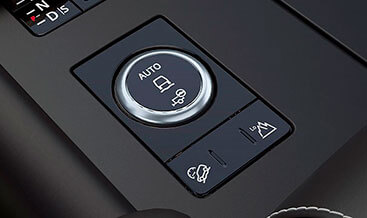
Our Terrain Response 2 AUTO + ATPC package delivers OEM-compliant feature activation for DOiP EVA2.0 Jaguar Land Rover off-road capable vehicles. Furthermore, most capable base-trim chassis already hold the full sensor, ABS/ESC and powertrain hardware stack required for these off-road functions.
Meanwhile, factory build configuration often locks the AUTO terrain detection logic and ATPC low-speed progress control. Vehicles without this coding only support manually selected terrain profiles, losing the intelligent surface recognition and steady crawl capability.
Therefore, without validated CCF configuration, the TCM, ABS, PCM, IMC and GWM gateway cannot synchronise off-road domain operating parameters. As a result, the AUTO mode option and ATPC controls remain hidden in the Pivi Pro interface, and related off-road DTCs may log during traction events. In addition, our technicians use official Pathfinder diagnostics to apply validated CCF edits for seamless cross-module off-road operation across CAN-FD networks.
JLR Terrain Response 2 AUTO is an intelligent terrain management system. First of all, it continuously interprets wheel slip, steering angle, suspension height, wheel speed and traction sensor data to identify surface conditions automatically.
It exchanges CAN-FD frames with the ABS module, PCM powertrain controller, TCM transmission module and IMC infotainment master controller. AUTO mode selects the optimal terrain profile including Grass-Gravel-Snow, Mud-Ruts and Sand without manual driver input.
Next, ATPC, All Terrain Progress Control, acts as a dedicated low-speed off-road cruise function. It manages brake and throttle demand to maintain a constant crawl speed between 1.8 km/h and 30 km/h, so the driver focuses only on steering and obstacle avoidance.
Moreover, ATPC works alongside Hill Descent Control, traction control and differential locking logic. Even so, complete hardware availability alone cannot unlock the combined Terrain Response 2 AUTO and ATPC feature set.
Instead, your vehicle CCF build file must declare both functions as fitted and authorised. Conversely, unvalidated third-party coding cannot replicate JLR factory slip thresholds, speed ramping and terrain transition calibration tables.
Poor-quality configuration triggers intermittent ABS-PCM communication faults, missing Pivi Pro off-road menu entries or unstable ATPC speed holding. For this reason, our programming strictly follows official JLR workshop technical standards.
We only apply approved CCF flag changes and avoid irreversible ECU flash operations. In turn, factory ABS, HDC, powertrain and Pivi Pro infotainment functions remain fully intact after coding completion.
Once CCF programming and post-coding system validation finish, Terrain Response 2 AUTO and ATPC operate strictly to original JLR factory specifications. Most importantly, AUTO mode automatically adapts powertrain, transmission, traction and suspension calibrations to detected terrain.
Drivers gain native Pivi Pro off-road menu access for ATPC speed adjustment and mode switching. Besides that, ATPC maintains consistent low-speed progress on steep, slippery or uneven ground, with adjustable set speed via steering wheel controls.
Off-road system status and traction metadata transmit correctly across the CAN-FD bus without communication conflicts. At the same time, existing HDC and traction control systems retain full compatibility with the newly activated functions.
This activation service supports DOiP EVA2.0 Jaguar Land Rover platforms fitted with the required ABS, transfer case and traction hardware. Supported models include New Range Rover L460, Range Rover Sport L461, Defender L663, Velar L560 and Discovery 5 L462.
On one hand, many vehicles already carry all required hardware and only require software activation. On the other hand, some lower-spec variants lack the correct ABS calibration or transfer-case hardware and are not eligible. Notably, vehicles with non-compliant module firmware cannot use this upgrade.
Before technicians start coding work, we run a full pre-upgrade diagnostic scan. It validates module firmware versions, CAN-FD bus health and eligibility for Terrain Response 2 AUTO plus ATPC.
To begin with, we perform a full diagnostic scan across ABS, PCM, TCM, IMC and GWM. We capture existing off-road system DTC faults and confirm baseline network health status.
Our technicians verify hardware eligibility and sensor signal integrity per JLR workshop service procedures. They confirm wheel-speed, suspension and traction sensor feeds operate within factory tolerances.
After hardware validation finishes, we execute official Pathfinder DOIP CCF programming to enable Terrain Response 2 AUTO and ATPC build flags, synchronising all relevant modules on the CAN-FD vehicle network.
Afterwards, we verify AUTO terrain switching, ATPC set-speed adjustment and Pivi Pro off-road menu entry. Finally, we clear all residual fault codes and run final off-road system validation before customer hand-over.

E-Pace 2021+
E-Pace 2021+

E-Pace 2021+
E-Pace 2021+

E-Pace 2021+
E-Pace 2021+
E-Pace 2021+
E-Pace 2021+