Sign up now
Join now and unlock your hidden features and OEM upgrading experiences.
You must be logged in to submit the form.

Adaptive Cruise Control with Stop‑Go Retrofit & OEM DOIP Coding | JLR Queue‑Assist ADAS Upgrade
Our Adaptive Cruise Control with Stop‑Go package delivers genuine OEM RADM 77GHz long‑range forward radar sensor installation and activation for modern DOiP‑architecture Jaguar Land‑Rover EVA2.0 vehicles. Many chassis retain front‑grille mounting geometry and CAN‑FD ADAS‑domain network routing required for RADM radar, DADC driver‑assist‑domain‑controller and related powertrain‑brake ECUs.
Many base‑trim variants are equipped with basic fixed‑speed cruise control but omit the RADM long‑range radar unit and matching CCF build‑data flags. Simply fitting a physical radar sensor alone cannot unlock full factory‑spec Adaptive Cruise Control with Stop‑Go Queue‑Assist traffic‑jam functionality.
Without validated CCF configuration, DADC, RADM, ABS brake‑controller, PCM powertrain‑module, IPC instrument‑cluster, IMC and GWM gateway cannot synchronise longitudinal ADAS CAN‑FD signals. Consequently Stop‑Go Queue‑Assist controls stay hidden within Pivi Pro driver‑assist menu, and ADAS‑system‑related DTC fault‑codes may populate. Our technicians utilise official Pathfinder diagnostics to apply validated CCF edits for complete Adaptive Cruise Control with Stop‑Go operation across vehicle ADAS networks.
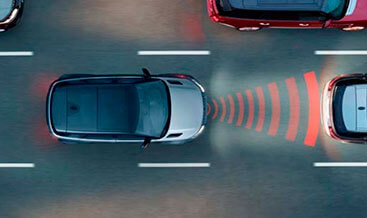
JLR OEM Adaptive Cruise Control with Stop‑Go (Queue‑Assist) is a longitudinal ADAS peripheral managed primarily by the DADC Driver‑Assist‑Domain‑Controller paired with the RADM 77‑GHz long‑range forward radar module. The forward‑facing radar continuously monitors preceding‑vehicle distance and relative velocity, feeding object‑tracking data to DADC for speed‑and‑gap‑calculation.
It exchanges CAN‑FD ADAS‑domain status frames with ABS, PCM, IPC, IMC and GWM gateway modules. DADC generates acceleration and deceleration requests transmitted to powertrain and brake systems to maintain user‑selected cruising‑speed and configurable following‑gap. Stop‑Go Queue‑Assist enables full vehicle stand‑still braking in traffic queues; after short stationary stops the system resumes following traffic upon light accelerator tap, while longer stationary stops require explicit driver input to resume operation.
The driver retains full authority and can override ACC at any time via brake or accelerator pedal inputs. Instrument‑cluster renders target‑speed, gap‑setting and system‑status warnings, and driver‑intervene prompts appear when system operational limits are reached. This feature operates independently of lane‑centring steering‑assist and focuses purely on longitudinal speed‑and‑distance regulation.
Accurate radar static alignment calibration is mandatory after hardware fit‑out to ensure reliable object‑detection performance. Even physically intact RADM radar hardware alone cannot activate this complete Adaptive Cruise Control with Stop‑Go feature‑set.
Your vehicle CCF build‑file must declare that Adaptive‑Cruise‑Control‑with‑Stop‑Go radar hardware is physically fitted. Generic third‑party coding cannot replicate JLR factory radar‑object‑filtering, gap‑threshold mapping or longitudinal request‑ramping parameters.
Poor‑quality configuration triggers intermittent DADC‑RADM‑ABS DTC faults, erratic speed‑regulation or missing Pivi‑Pro driver‑assist‑menu‑entries. Our programming adheres strictly to official JLR TOPIx workshop technical standards.
We apply only approved CCF‑flag changes and avoid irreversible DADC / RADM ECU‑flash‑operations. Existing basic cruise‑control, braking‑system and Pivi‑Pro infotainment functions remain fully intact after coding‑completion.
Once hardware fitment, RADM radar static‑calibration and DOIP configuration finish, Adaptive Cruise Control with Stop‑Go runs strictly to original JLR factory‑specifications. Most importantly variable‑speed adaptive cruise, multi‑stage following‑gap adjustment and Stop‑Go Queue‑Assist full‑stop braking become fully operational.
Drivers gain native Pivi Pro driver‑assist‑menu access to configure ACC gap‑preferences and review system‑status. Besides that, instrument‑cluster displays set‑speed, detected‑vehicle indicators and driver‑intervene warning alerts according to OEM specification.
The ACC‑system‑status and radar‑object‑metadata‑signals transmit correctly across CAN‑FD ADAS‑bus without communication‑conflicts. At the same time, existing ABS, powertrain and basic cruise‑control routines retain full‑operational‑compatibility.
This retrofit‑activation‑service supports DOiP EVA2.0 Jaguar Land‑Rover platforms mechanically compatible with OEM RADM radar Adaptive Cruise Control with Stop‑Go hardware. Supported models include New Range Rover L460, Range Rover Sport L461, Defender L663, Velar L560 and Discovery 5 L462.
On one hand, some vehicles already hold complete RADM forward‑radar hardware and only require pure software activation plus radar static‑calibration. On the other hand, other base‑spec variants need the full Adaptive‑Cruise‑Control‑with‑Stop‑Go retrofit‑kit including RADM radar unit and CAN‑FD harness‑segments. Notably, units without compatible front‑grille radar‑mount geometry or non‑compliant DADC‑RADM firmware cannot use this upgrade.
Before technicians start physical‑or‑coding‑work, we run a full pre‑upgrade diagnostic‑scan. It validates module‑firmware‑versions, CAN‑FD ADAS‑bus health and Adaptive‑Cruise‑Control‑with‑Stop‑Go‑hardware‑eligibility‑status.
First we complete a full diagnostic‑scan across DADC, RADM, ABS, PCM, IPC, IMC and GWM. We capture existing ADAS‑system DTC fault‑codes and confirm baseline CAN‑FD ADAS‑network health‑status.
Our technicians install OEM RADM forward‑radar sensor and CAN‑FD harness adaptors where hardware is missing. All connector‑terminations, front‑grille disassembly follow JLR workshop ADAS component‑refitting‑procedures.
After mechanical fit‑out and hardware‑validation‑finishes, we execute official Pathfinder DOIP CCF programming plus RADM radar static‑alignment calibration. This step enables Adaptive‑Cruise‑Control‑with‑Stop‑Go build‑flags and synchronises all relevant‑modules on the vehicle CAN‑FD ADAS‑network.
Afterwards, we verify ACC speed‑regulation, gap‑setting‑response and Pivi Pro driver‑assist‑menu entry. Finally, we clear all residual fault‑codes and run final ADAS‑system validation before customer‑hand‑over.
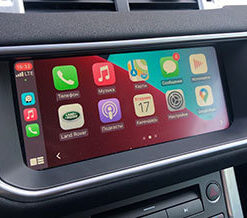
Evoque 2016-19

Evoque 2016-19
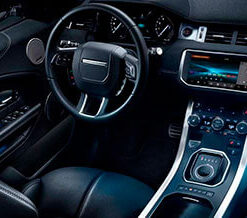
Evoque 2016-19
Evoque 2016-19
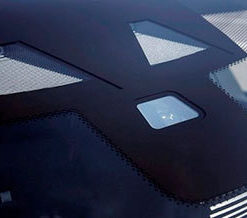
Evoque 2016-19
Evoque 2016-19
Evoque 2016-19
Evoque 2016-19