Sign up now
Join now and unlock your hidden features and OEM upgrading experiences.
You must be logged in to submit the form.

Activity Key Retrofit & OEM DOIP Coding | JLR Waterproof Wristband Access Upgrade
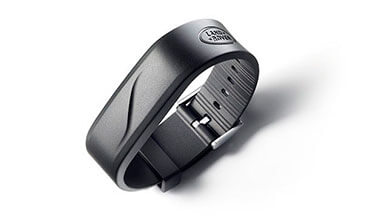
Our Activity Key package delivers genuine OEM waterproof Activity‑Key wristband hardware installation for modern DOiP‑architecture Jaguar Land‑Rover PEPS vehicles. Furthermore, many PEPS‑equipped chassis already support the Activity‑Key LF‑antenna communication infrastructure.
Meanwhile, many mid‑level trim configurations omit the genuine Activity‑Key wristband token and corresponding CCF build‑data flags. Simply pairing an Activity‑Key wristband alone will never unlock the complete factory security‑feature set.
Therefore, without validated CCF configuration, KVM, BCM, IMC and GWM cannot synchronise Activity‑Key security‑domain signals. As a result, the vehicle logs PEPS‑related DTC faults, hides Activity‑Key menu entries and fails to trigger the secure interior‑fob de‑activation routine. In addition, our technicians use official Pathfinder diagnostics to apply validated CCF edits for full wristband‑access operation across CAN‑FD networks.
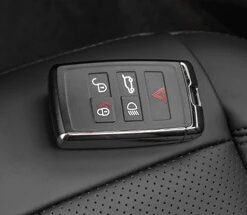
JLR OEM Activity Key is a waterproof passive‑access wristband peripheral for the factory PEPS keyless‑entry‑and‑start system. First of all, the KVM Keyless‑Vehicle‑Module manages all LF‑antenna communication with the Activity‑Key wristband token.
It exchanges CAN‑FD security‑status frames with BCM body‑controller, IMC infotainment‑master‑controller and GWM gateway. KVM validates the wristband’s encrypted transponder credentials when the user touches the exterior door‑handle sensor.
Next, upon valid wristband authentication, the system automatically de‑activates any conventional smart‑fob left stored inside the cabin. This prevents locked‑inside‑key theft risks while you keep the waterproof wristband on‑person for outdoor activities.
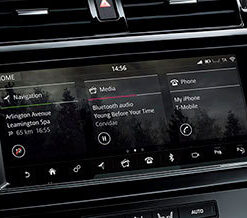
Moreover, users can configure and review Activity‑Key status within the Pivi Pro vehicle security menu. The wrist‑band is fully waterproof and shock‑resistant, built for swimming, surfing and other outdoor‑lifestyle use‑cases.
This security accessory depends on stable LF‑antenna reception and valid PEPS module firmware. Even so, physical Activity‑Key wristband hardware alone cannot activate this complete feature‑set.
Instead, your vehicle CCF build‑file must declare that Activity‑Key hardware is authorised within the PEPS security topology. Conversely, unvalidated third‑party coding cannot replicate factory wristband‑authentication filtering or interior‑fob de‑activation logic.
Poor‑quality configuration will trigger intermittent KVM‑BCM DTC faults, failed wristband unlocking or broken in‑cabin fob‑security de‑activation. For this reason, our programming strictly follows official JLR workshop technical standards.
We only apply approved CCF‑flag changes and avoid irreversible KVM ECU‑flash operations. In turn, all original smart‑key‑fob PEPS functions remain fully intact after coding completion.
Once hardware provisioning and DOIP calibration finish, Activity Key runs strictly to original JLR factory specifications. Most importantly, the waterproof wristband performs passive door‑lock and unlock via exterior door‑handle capacitive sensors.
Drivers gain automatic in‑cabin smart‑fob de‑activation once Activity‑Key authenticates. Besides that, users can access Activity‑Key status and configuration controls within the native Pivi Pro security‑settings menu.
The PEPS security‑status and wristband‑authentication signals transmit correctly across the CAN‑FD bus without communication conflicts. At the same time, all existing factory smart‑key‑fob functionality continues working unchanged.
This retrofit‑and‑activation service supports DOiP EVA2.0 Jaguar Land‑Rover PEPS‑equipped platforms with compatible LF‑antenna infrastructure. Supported models include New Range Rover L460, Range Rover Sport L461, Defender L663, Velar L560 and Discovery 5 L462.
On one hand, some vehicles already hold full LF‑antenna hardware and only require wrist‑band provision plus software activation. On the other hand, rare chassis require supplementary LF‑antenna retrofit hardware. Notably, units with non‑compliant KVM‑PEPS firmware are not eligible for this upgrade.
Before technicians commence pairing or coding‑work, we run a full pre‑upgrade diagnostic scan. It validates module firmware versions, CAN‑FD / LF‑antenna bus health and Activity‑Key eligibility‑status.
To begin with, we perform a full diagnostic scan across KVM, BCM, IMC and GWM. We capture existing PEPS‑security‑system DTC fault codes and confirm baseline keyless‑entry network‑health status.
Our technicians provision the genuine OEM Activity‑Key wristband and complete secure PEPS transponder pairing procedures. They verify LF‑antenna signal reception per official JLR workshop service procedures.
After hardware‑pairing validation finishes, we execute official Pathfinder DOIP CCF programming. This step enables Activity‑Key build flags and synchronises all relevant modules on the CAN‑FD vehicle‑network.
Afterwards, we verify wristband lock‑unlock performance, interior‑fob de‑activation behaviour and Pivi Pro security‑menu entry. Finally, we clear all residual fault‑codes and run final PEPS‑system validation before customer hand‑over.
I-Pace 2021+

I-Pace 2021+
I-Pace 2021+

I-Pace 2021+
I-Pace 2021+
I-Pace 2021+
I-Pace 2021+