Sign up now
Join now and unlock your hidden features and OEM upgrading experiences.
You must be logged in to submit the form.

Wireless Device Charging Activation & Retrofit | OEM JLR Qi Centre‑Console Upgrade
Our Wireless Device Charging service delivers software‑only activation or full hardware‑plus‑coding retrofit for modern DOiP‑enabled Jaguar and Land Rover vehicles. Many mid‑spec chassis are pre‑fitted with the genuine WCPM wireless‑charging‑pad module integrated within the centre‑console storage bin. Unfortunately, factory CCF trim‑level restrictions can disable Qi‑standard wireless‑charging functionality even when all physical charging‑pad hardware is already installed on‑board.
As a result, owners cannot utilise cable‑free smartphone charging despite having the OEM pad hardware in place. Using our certified Pathfinder DOIP programming, we update WCPM charging‑pad‑module, IMC infotainment, BCM and gateway GWM CCF parameters to unlock full wireless‑device‑charging feature‑sets. For vehicles missing the genuine WCPM pad assembly, we supply OEM charging‑pad hardware, centre‑console trim components and LIN‑bus wiring‑harness adaptation. Furthermore, our OEM‑compliant workflow maintains stable LIN‑CAN bus communication and eliminates wireless‑charging‑related DTC faults such as U1223‑00 across all associated modules.
JLR’s OEM Wireless Device Charging (Qi standard) system is managed by the WCPM wireless‑charging‑pad module, which communicates over LIN‑bus to BCM and GWM, while sharing status feedback with the IMC Pivi Pro infotainment unit. The WCPM regulates charging power output, foreign‑object‑detection (FOD), thermal over‑heat protection and charging‑status feedback signals. Beyond physical Qi‑pad fitment, correct CCF build‑file flags notify the vehicle network that wireless‑charging hardware is present on the LIN‑bus.
For this reason, multiple DOiP‑platform JLR vehicles carry dormant wireless‑charging‑pad electronics on mid‑range trim configurations. Generic third‑party coding cannot properly align WCPM power‑limit thresholds and foreign‑object‑detection parameters with factory module firmware. In many instances, these incomplete edits trigger intermittent pad‑communication DTC faults, over‑current warnings or disrupt existing USB‑port power‑delivery operation.
Our dealer‑level programming strictly adheres to official JLR OEM technical specifications. We only modify approved CCF configuration flags for pure‑software‑activation jobs, without permanent WCPM ECU‑flash operations. Moreover, all factory foreign‑object‑detection logic, thermal‑protection limits and diagnostic‑logging routines stay fully intact to safeguard long‑term charging‑pad and vehicle‑electrical‑system integrity.
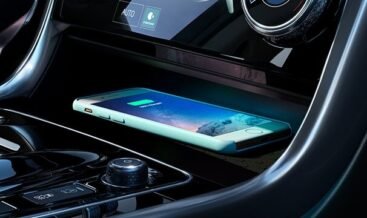
Once technicians finish coding and any physical‑hardware installation work, Wireless Device Charging operates strictly per official JLR factory specifications. Simply place a Qi‑compatible smartphone onto the centre‑console charging‑pad to initiate cable‑free power transfer. In addition, built‑in foreign‑object‑detection circuitry halts power delivery if metal objects are detected on the pad surface to prevent over‑heating risks.
Meanwhile, charging‑state status notifications appear within the Pivi Pro infotainment user‑interface. The WCPM enforces OEM‑defined thermal‑throttling to reduce power output under high‑temperature conditions. Every charging‑power‑profile value, FOD‑sensitivity threshold and thermal‑protection setting retains original OEM factory‑calibration values.
This Wireless Device Charging upgrade supports all DOiP‑capable JLR platforms compatible with WCPM Qi‑charging‑pad assemblies. Some vehicles roll off production lines pre‑fitted with genuine WCPM charging‑pad hardware and matching console trims, while other chassis accept OEM wireless‑charging‑pad retrofit kits. Supported examples include New Range Rover L460, Range Rover Sport L461, Defender L663, Velar, Evoque and latest‑generation premium Jaguar vehicles.
Before technicians commence any coding or retrofit tasks, our team completes a full pre‑program diagnostic scan. This check validates WCPM module firmware versions, LIN‑bus stability and genuine wireless‑device‑charging‑pad‑hardware eligibility status.
Our complete service workflow opens with multi‑module pre‑upgrade diagnostics covering WCPM wireless‑charging‑pad‑module, IMC infotainment unit, BCM body‑controller and GWM gateway unit. We inspect existing USB‑power‑port operation and read WCPM diagnostic data where hardware is present. Where vehicles hold valid genuine WCPM charging‑pad hardware, we run official JLR Pathfinder DOIP CCF programming. This procedure enables wireless‑device‑charging parameters and restores pad‑power‑output and status‑feedback logic.
For full‑retrofit assignments, our technicians fit genuine OEM WCPM Qi‑charging‑pad assemblies, centre‑console trim parts plus corresponding LIN‑bus wiring‑harness adaptors. Next, we complete WCPM‑module configuration, foreign‑object‑detection validation and bus synchronisation before functional validation testing. We verify Qi‑device charging performance, foreign‑object‑detection response and infotainment‑status‑message output. Lastly, technicians clear all residual fault‑codes to deliver consistent long‑term OEM‑standard Wireless Device Charging performance.

Uncategorized
Uncategorized


Uncategorized

Range Rover Accessories
Uncategorized
Uncategorized