
Sign up now
Join now and unlock your hidden features and OEM upgrading experiences.
You must be logged in to submit the form.

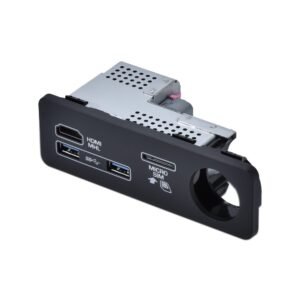
Original price was: $240.00.$230.00Current price is: $230.00.
JLR CarPlay AndroidAuto Upgrade Retrofit Kit | OEM Smartphone‑Pack USB‑Media‑Bus DOIP Programming
Our JLR CarPlay AndroidAuto Upgrade Retrofit Kit delivers genuine OEM high‑speed USB‑media‑bus hardware installation and Smartphone‑Pack activation for modern DOiP‑architecture Jaguar Land‑Rover EVA2.0 vehicles. In fact, many base‑trim chassis feature compatible IMC infotainment hardware, yet they leave the factory without the required high‑speed USB hub module, correct harness routing and matching CCF build‑data flags for Apple CarPlay and Android Auto smartphone projection.
Even if you add a physical USB port or third‑party adapter, this simple modification will not enable native Smartphone‑Pack functions. Instead, without validated DOIP CCF configuration, IMC, VDM vehicle‑dynamic‑module, BCM and GWM gateway cannot synchronise USB‑media‑bus and CAN‑FD infotainment‑domain signals. As a result, projection menu tiles remain hidden within Pivi Pro or InControl touch‑screens, and infotainment‑related DTC fault‑codes may log. Therefore, our technicians utilise official Pathfinder diagnostics to apply validated Smartphone‑Pack CCF edits for complete native CarPlay and Android Auto operation across vehicle infotainment networks.
JLR OEM CarPlay and Android Auto, also known as Smartphone‑Pack, is an infotainment‑domain feature managed primarily by the IMC Infotainment‑Master‑Controller working alongside VDM for USB protocol handling. Specifically, the OEM high‑speed USB‑media‑bus hub establishes USB 3.1 Gen 1 data communication between MFi‑certified smartphones and the vehicle infotainment head‑unit over CAN‑FD infotainment bus.
Furthermore, the system exchanges CAN‑FD infotainment‑domain status frames with BCM and GWM gateway modules. IMC executes USB‑device enumeration, protocol translation and renders CarPlay / Android Auto graphical user‑interface natively onto the Pivi Pro or InControl display. Meanwhile, steering‑wheel media‑switches, touch‑screen inputs and native voice‑assistant pass‑through for Siri and Google Assistant are fully supported. In addition, audio streams for navigation prompts, media‑playback and hands‑free telephony route through the factory Meridian or base‑audio amplifier hardware.
Generally speaking, wired USB‑cable connection is mandatory for most DOiP EVA2.0 platforms; wireless projection capability is strictly dependent upon IMC firmware revision and hardware variant. In other words, even with fully functional infotainment head‑unit hardware, missing OEM high‑speed USB‑media‑bus module or incorrect CCF parameters will block Smartphone‑Pack feature‑set operation.
First of all, your vehicle CCF build‑file must declare that Smartphone‑Pack and high‑speed USB‑media‑bus hardware is fitted. Conversely, generic aftermarket coding cannot replicate JLR factory USB‑device‑profile filtering, HS‑CAN handshake parameters and infotainment diagnostic threshold tables. If configuration is completed incorrectly, intermittent IMC‑VDM DTC faults, dropped smartphone‑connections or missing projection‑menu‑entries will appear. For this reason, our programming strictly adheres to official JLR TOPIx workshop technical standards.
Moreover, we apply only approved CCF‑flag modifications and avoid irreversible IMC ECU‑flash‑operations unless firmware updates are required. Meanwhile, existing DAB radio, Bluetooth streaming and factory navigation functions remain fully intact after coding‑completion.
Once USB‑media‑bus hardware fitment, harness validation and DOIP configuration finish, CarPlay and Android Auto run strictly to original JLR factory‑specifications. Notably, wired smartphone projection via MFi‑certified USB‑C cable becomes fully operational on Pivi Pro or InControl touch‑screens.
Additionally, drivers gain native infotainment‑settings‑menu access for Smartphone‑Pack configuration and device‑management. Steering‑wheel controls, touch‑screen interaction and voice‑assistant pass‑through work for both Apple and Android compliant handsets. On top of that, infotainment metadata transmits reliably across CAN‑FD infotainment‑bus with no communication‑conflicts, while native radio, Bluetooth‑hands‑free‑calling and onboard navigation retain full‑operational‑compatibility.
This retrofit‑activation‑service supports DOiP EVA2.0 Jaguar Land‑Rover platforms mechanically compatible with OEM high‑speed USB‑media‑bus and IMC Smartphone‑Pack requirements. For instance, supported models include New Range Rover L460, Range Rover Sport L461, Defender L663, Velar L560 and Discovery 5 L462.
Some vehicles already contain the required high‑speed USB‑media‑bus hardware and only require pure software activation. On the other hand, other base‑spec vehicles need the complete JLR CarPlay AndroidAuto Upgrade Retrofit Kit including OEM USB hub unit and CAN‑FD harness‑segments. In contrast, units with non‑compliant IMC firmware or missing infotainment‑bus routing cannot support this upgrade. Besides that, wireless projection is not guaranteed for all chassis.
Before technicians commence physical‑or‑coding‑work, we run a full pre‑upgrade diagnostic‑scan. Specifically, it validates module‑firmware‑versions, CAN‑FD infotainment‑bus health and Smartphone‑Pack hardware‑eligibility‑status by reading vehicle as‑built CCF‑data.
To start with, we perform a full diagnostic‑scan across IMC, VDM, BCM and GWM. We capture existing infotainment‑system DTC fault‑codes and confirm baseline CAN‑FD infotainment‑network health‑status.
After that, our technicians install OEM high‑speed USB‑media‑bus hub module and harness adaptors where hardware is missing. All connector‑terminations and centre‑console trim‑removal follow JLR infotainment‑system refitting‑procedures.
Once mechanical fit‑out and hardware‑validation finish, we execute official Pathfinder DOIP CCF programming enabling Smartphone‑Pack build‑flags and synchronise all relevant‑modules on the vehicle CAN‑FD infotainment‑network.
Subsequently, we verify USB‑device enumeration, CarPlay / Android‑Auto projection‑menu‑tile appearance and infotainment‑system‑behaviour. Lastly, we clear all residual fault‑codes and run final infotainment‑system validation before customer‑hand‑over.


Uncategorized
Uncategorized

Uncategorized
Range Rover Accessories
Uncategorized
Uncategorized